I did some math the other day that genuinely surprised me.
The United States Strategic Petroleum Reserve—our emergency stash of oil—currently holds about 412 million barrels. Sounds like a lot, right? It did to me too, until I divided it by our daily consumption of 20.25 million barrels.
"Twenty days. That's it. Twenty days of oil if the supply chain suddenly broke."
That's it. Twenty days of oil if the supply chain suddenly broke. We used to have 36 days. Back in 2009, the SPR peaked at 726 million barrels. Then we sold 180 million of them in 2022 when prices spiked. Smart trade, actually—we sold at $96 a barrel and we're buying back at $76. But we're buying back slowly. Really slowly. At the current pace of about 3 million barrels per quarter, it would take us over two decades to refill.
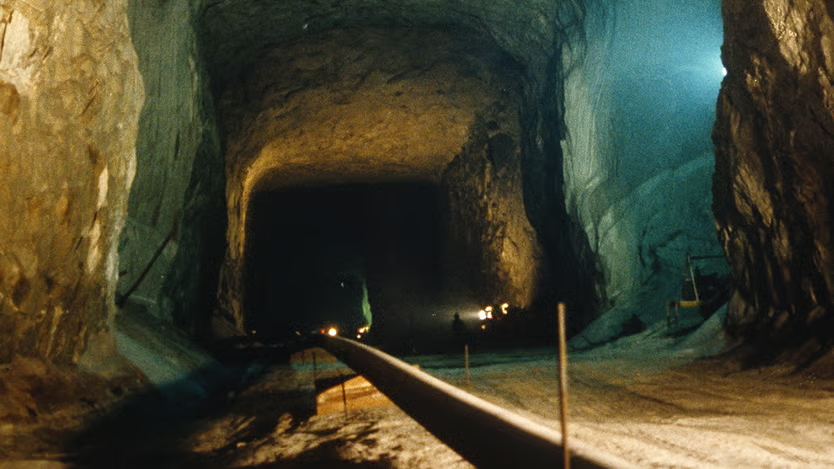
US Strategic Petroleum Reserves are stored in underground caverns carved out of salt. Rock salt has low porosity, permeability, self-healing properties, and doesn't react with oil.
Image: Science Photo Library
Strategic Petroleum Reserve: Our Shrinking Safety Net
I'm not even sure why this bothered me so much. We're a net oil exporter now. We produce more than we consume. The shale revolution changed everything. But something about cutting our emergency cushion in half while everyone argues about solar panels felt off.
And that got me thinking about the bigger picture: what is our energy mix actually going to look like in 15 years? Not what the politicians promise or what the activists demand or what the tech optimists predict. What's actually going to happen?
Because there's what we say about energy, and then there's what the data says.
What Actually Gets Built
Here's what matters: utilities make decisions based on capital costs, construction timelines, regulatory certainty, and bankability. Everything else is noise.
Between 2011 and 2025, the United States didn't transition away from fossil fuels. We transitioned from coal to natural gas, with a solar chaser on the side. Coal's share of electricity generation dropped from 44% to about 15%. Natural gas went from 20% to over 40%.
The Real Transition: Coal to Gas (Not Fossil to Renewable)
Solar did grow—impressively. From basically nothing to 8% of electricity generation. That's real. But here's the thing about going from 0% to 8%: it's a lot easier than going from 8% to 50%. When you look at the actual constraints—intermittency, storage costs, grid infrastructure, land use, local opposition—it becomes clear that solar's ceiling is lower than the hype suggests.
I spent the last few weeks diving into the data. EIA reports, utility commission filings, infrastructure assessments, nuclear project timelines. I looked at what's actually being built right now, what's scheduled to close, what's stuck in regulatory limbo, and what the economics actually pencil out to.
The picture that emerges is messier than either side wants to admit.
The 2040 Grid (If Current Trends Hold)
By 2040, if current trends hold and announced projects actually happen:
Natural gas will still provide 38-42% of our electricity. The shale revolution made it cheap and abundant. It's cleaner than coal (50% less CO2), faster to build than nuclear (2-3 years vs. 10-15), and flexible enough to back up solar and wind when the sun doesn't shine and the wind doesn't blow. Utilities love it because it's proven, bankable technology. When you need 500 megawatts in three years, you build gas. The market has spoken.
Solar will grow to maybe 18-22%. That's substantial growth from today's 8%, and it represents real progress. But it's not dominance. The grid wasn't designed for distributed, intermittent power. Battery storage is improving but expensive. And we're already seeing the policy whiplash—Trump just eliminated residential solar tax credits in December 2025. Solar's growth curve is real, but it's not exponential.
Nuclear will tick up slightly to 8-10%. Everyone wants a nuclear renaissance. Trump set a goal of 400 gigawatts by 2050, up from today's 100 GW. It's not happening on that timeline.
The 2040 Grid: If Current Trends Hold
Still 40-45% fossil fuels in 2040. That's not a transition—that's a fuel substitution.
Hydropower will decline to 4-5%. This one surprised me. We have 92,000 dams in this country. Their average age is 64 years. Most were designed to last 50-100 years. The relicensing process—required every 50 years—now costs millions and requires fish passage infrastructure, environmental upgrades, and sometimes completely unrelated infrastructure that local agencies extract as conditions. Many dam operators are looking at the bill and just choosing closure instead. We're going to lose 10-15 gigawatts of our most reliable renewable energy because the infrastructure is aging out and we're not prepared.
Coal will drop to 3-5%, nearly extinct but not quite zero. There are 80+ gigawatts of coal capacity scheduled to retire by 2030. The utilities have the closure dates mapped. The last new coal plant was built in 2013. This is the rare bipartisan success story—coal is dying because it can't compete economically with anything.
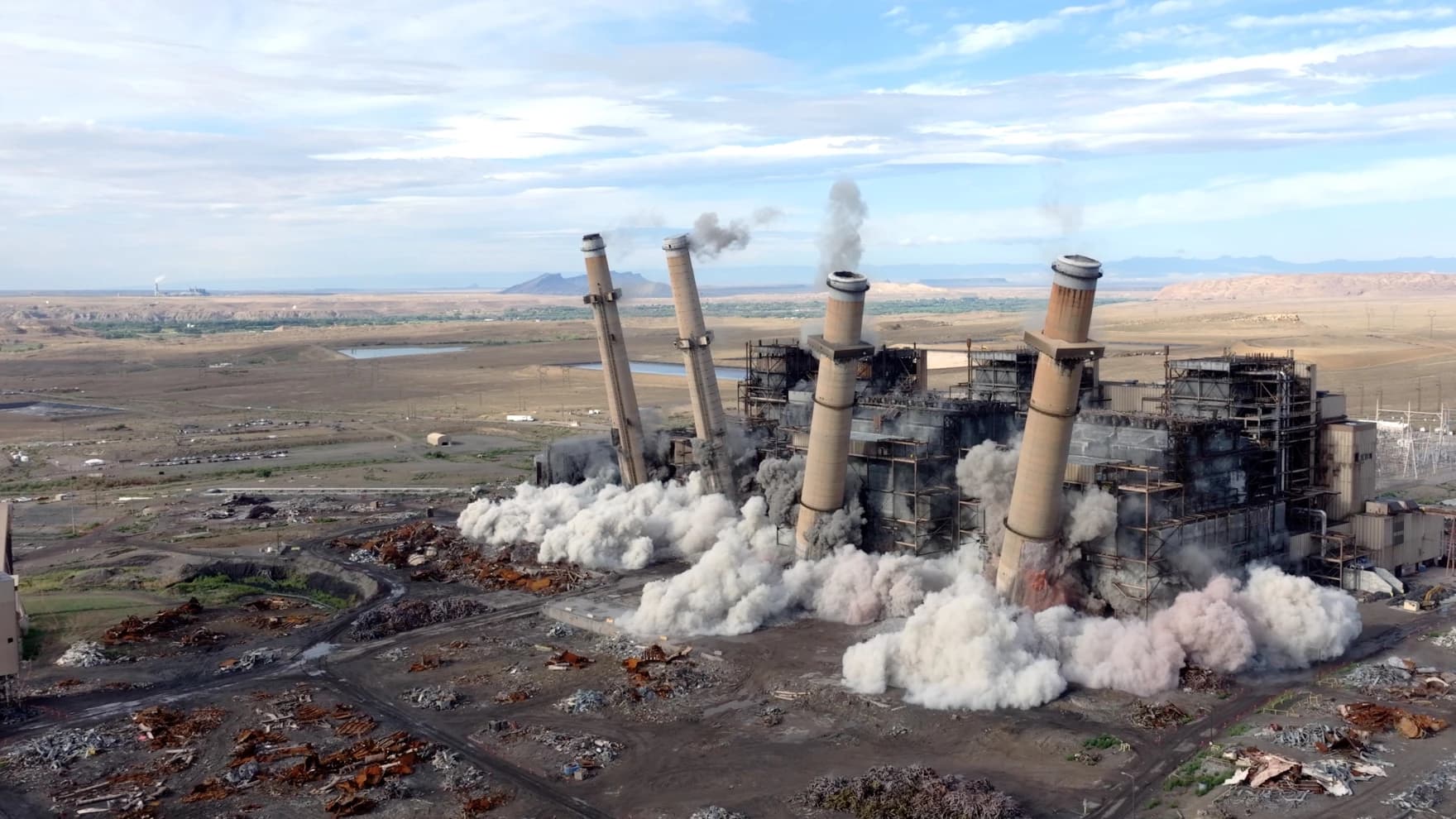
Coal plants across America are being decommissioned. There are 80+ gigawatts of coal capacity scheduled to retire by 2030—the last new coal plant was built in 2013.
Image: Benjamin Hunter/EcoFlight via ksut.org
Add it up: By 2040, we're still getting 40-45% of our electricity from fossil fuels, mostly natural gas. Another 20-25% from solar and wind. About 8-10% from nuclear. The rest from hydro and other sources.
That's not an energy transition. That's a fuel substitution from coal to gas, with renewables playing an important but supporting role.
Why Shale Won
The shale revolution is one of those things that seems obvious in hindsight but was far from guaranteed. In the early 2000s, natural gas was expensive and getting more expensive. We were talking about building LNG import terminals because we thought we'd need to bring gas in from overseas.
Then horizontal drilling and hydraulic fracturing unlocked massive reserves in places like the Marcellus, Permian, and Bakken. Production exploded. Prices collapsed. And suddenly the United States had abundant, cheap natural gas.
But abundance alone doesn't explain why gas won. Plenty of abundant resources don't dominate markets.
How Long Does It Take to Build Power Plants?
Gas plants: 2-3 years vs. Nuclear: 10-15 years
Gas won because of speed. A combined-cycle gas plant can be permitted, built, and operational in 2-3 years. Compare that to 10-15 years for nuclear, 5-7 years for large-scale solar farms with transmission build-out, or the regulatory nightmare of new hydropower.
Gas won because of flexibility. Gas plants can ramp up and down quickly to match demand and compensate for intermittent renewables. When solar production drops at sunset, gas plants pick up the slack. That flexibility has real value in a grid that's adding more weather-dependent generation.
Gas won because of bankability. Banks understand gas. They've financed hundreds of these projects. They know the construction risks, the operating costs, the revenue models. When a utility needs capital, gas projects get financed. Exotic new technologies require expensive capital and longer timelines.
The market made this choice, not activists or politicians or regulators. Gas plants got built because they penciled out better than the alternatives given the constraints of capital, construction, and regulatory reality.
Nuclear: The Technology We Can't Build
Here's what bothers me about nuclear: the physics is extraordinary.
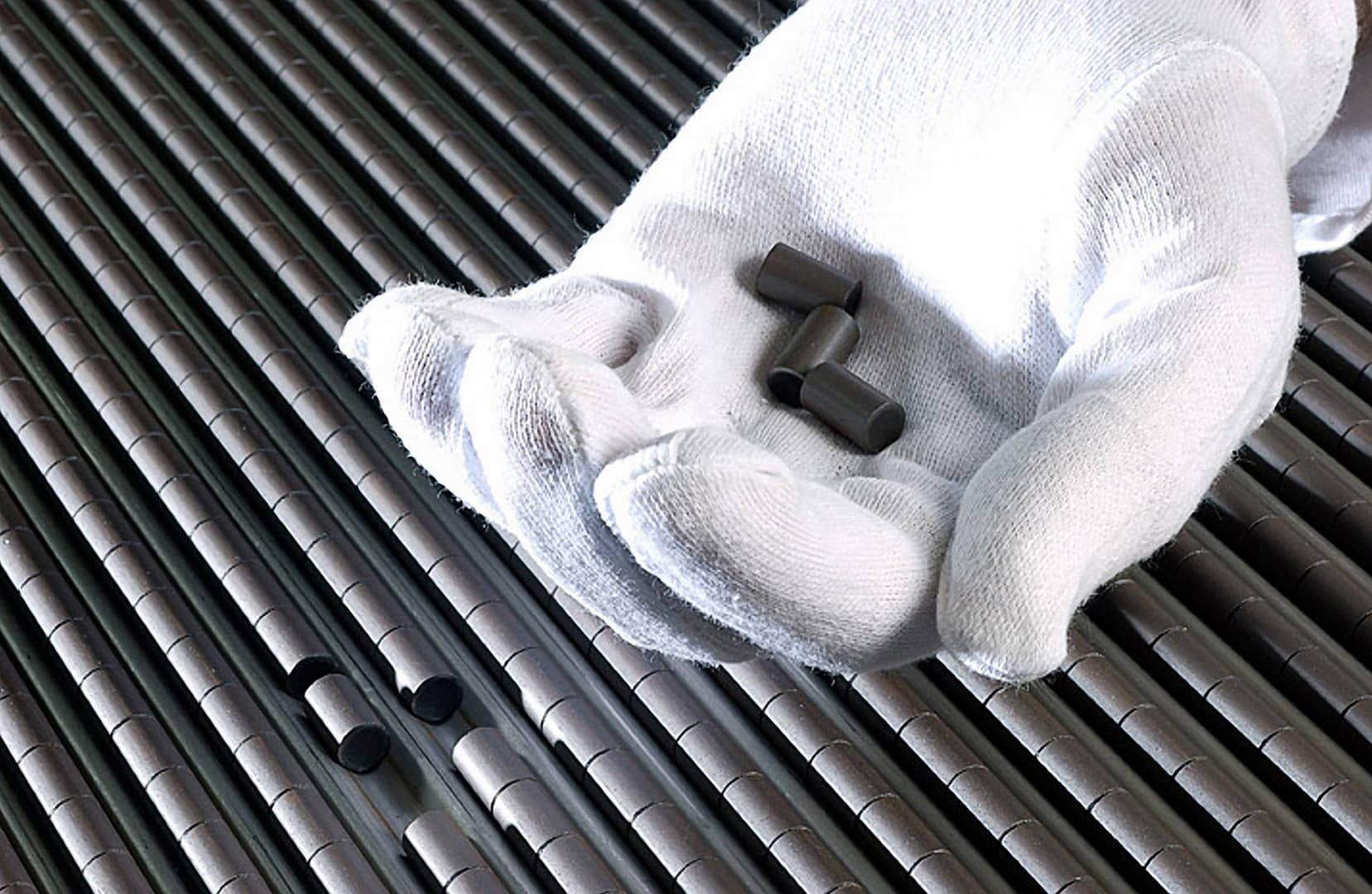
A thimble-sized uranium pellet (3/8-inch diameter, 5/8-inch length) contains as much energy as one ton of coal. Modern reactor cores may contain up to 10 million pellets stacked in fuel rods.
Image: US Nuclear Regulatory Commission
The Extraordinary Physics of Nuclear
Source: U.S. Department of Energy, Nuclear Energy Institute
A uranium pellet the size of your fingertip produces as much energy as one ton of coal, 149 gallons of oil, or 17,000 cubic feet of natural gas. The energy density is absurd. Nuclear plants operate at 90%+ capacity factors, compared to solar's 25% and wind's 35%. They produce zero carbon emissions during operation. They require relatively small land footprints. And the fuel is plentiful.
"We solved the energy problem in the 1950s. Then we spent 70 years making it too expensive to use."
The Vogtle project in Georgia is the poster child. Announced in 2008. Originally budgeted at $14 billion. Finally completed in 2024 at $31 billion, eight years late. That's not a rounding error. That's a systemic failure.
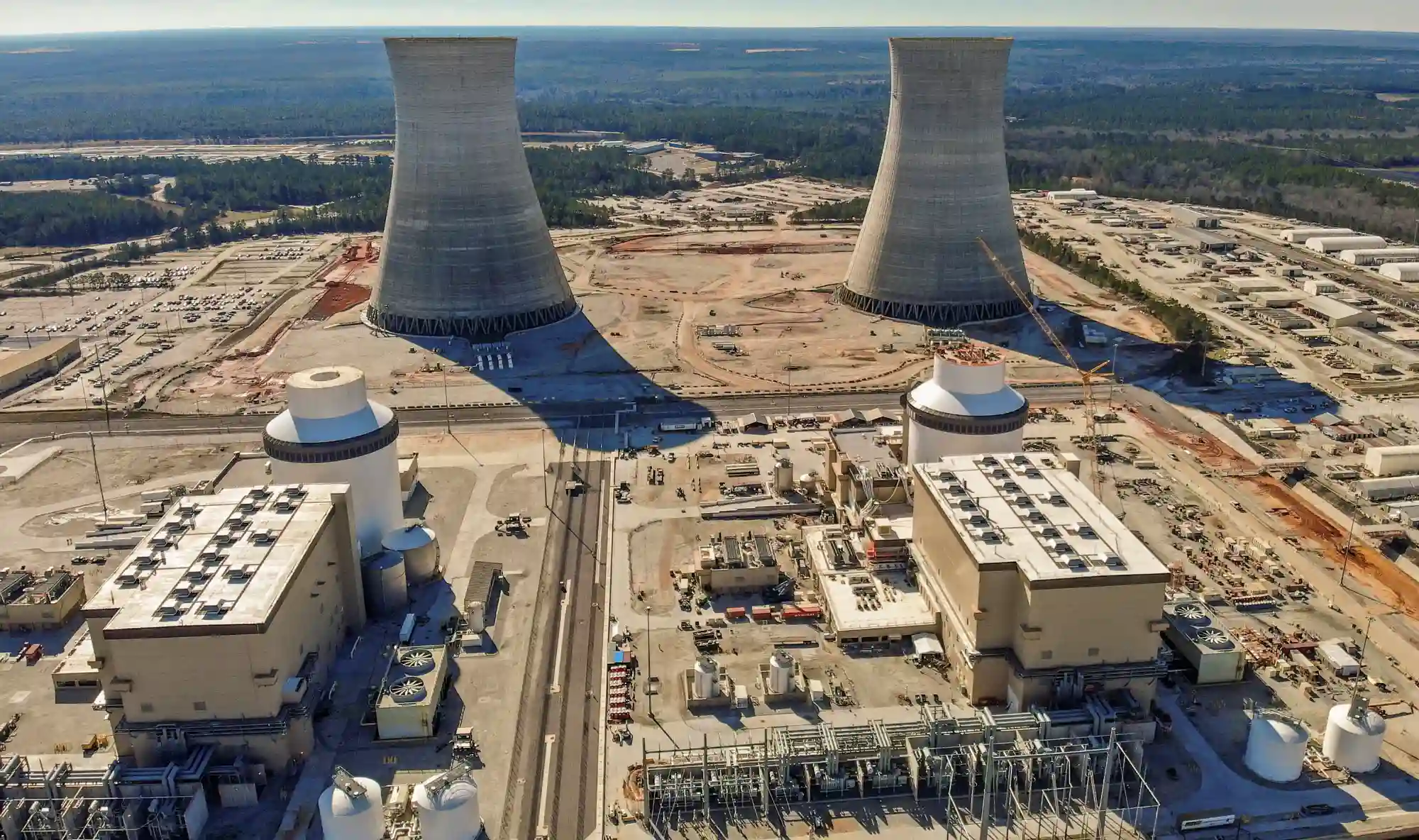
Vogtle Units 3 and 4—America's first new nuclear reactors in over 30 years. Originally budgeted at $14 billion, they cost $31 billion and took 8 years longer than planned.
Image: Bechtel drone footage, 2023
The Vogtle Project: A Case Study in Nuclear Cost Overruns
Why can't we build nuclear plants?
Three reasons: regulatory complexity, construction capability, and cost certainty.
Regulatory complexity: The Nuclear Regulatory Commission oversees an extraordinarily complex approval process. Every design requires exhaustive safety reviews. Every component requires documentation. Changes during construction trigger more reviews. This isn't arbitrary bureaucracy—nuclear safety matters—but it adds years and billions to every project.
Construction capability: We've built so few nuclear plants in the last 40 years that we've lost the institutional knowledge. The workforce that built plants in the 1970s retired. The supply chains atrophied. When Vogtle started construction, they had to relearn how to build at scale. Every mistake cascaded into delays.
Cost certainty: Banks won't finance projects with uncertain timelines and budgets. Nuclear projects routinely run over budget by 50-200%. Compare that to gas plants, which typically come in within 10-20% of budget. From a capital allocation perspective, nuclear is a terrible bet.
Small Modular Reactors (SMRs)
SMRs promise to fix some of these problems. Factory-built, standardized designs, shorter construction timelines, lower upfront capital requirements. NuScale, X-energy, TerraPower, and others have designs in various stages of approval.
But even if the technology works, deployment is still 5-7 years away at minimum. And the first few projects will face the same learning curves that plagued Vogtle. The market will build a few to prove the concept. Maybe they pencil out. Maybe they don't. But the idea that SMRs will transform the grid by 2040 is optimistic.
Trump's goal of 400 GW by 2050 would require building roughly 200-250 new reactors. At current construction timelines, that's impossible. Even if we compress timelines dramatically, we'd need to start 10-15 projects per year immediately. We can't do that. We don't have the workforce, the supply chains, or the regulatory throughput.
Nuclear remains the highest-potential technology we're unable to execute at scale.
Why This Matters
I'm not making a moral argument here. I'm not saying this is good or bad. I'm saying this is what the data shows will happen if you follow the money, the construction timelines, the regulatory approvals, and the economic incentives.
The conversation about energy in America has gotten weirdly detached from what actually gets built. One side acts like we can flip a switch to 100% renewables by 2030. The other side pretends coal is making a comeback. Both are wrong.
What's actually happening is messier and more complicated. We're building a lot of solar—more than ever before. We're also building natural gas plants to back it up. We're talking about nuclear but barely building it. We're watching our hydropower infrastructure age out without a replacement plan. And we're letting our emergency oil reserves drop to levels that should make us uncomfortable.
The next 15 years of American energy policy will be defined by one uncomfortable truth: we need everything. We need to invest in grid infrastructure. We need natural gas to provide reliable baseload and backup power. We need solar and wind to provide cheap, clean capacity. We need nuclear if we can ever figure out how to build it on time and on budget. We need to maintain the hydropower we have. And we need to be honest about the fact that the "transition" everyone talks about is going to take a lot longer than anyone wants to admit.
Because right now, we're running a grid that's increasingly complex, with aging infrastructure, surging demand from data centers and EVs, and a policy environment that swings wildly every four years.
That's the energy future we're actually building.
The market will keep choosing what works. Gas works right now. Solar works in some places. Nuclear could work if we let it. Everything else is what we tell ourselves while the utilities make their calls.
Drew's News
Occasional thoughts on money, markets, and the structures that shape them. Once a month, at most.